Roxburgh residents invited to learn about flood findings

Aimee Wilson
12 February 2026, 5:00 PM
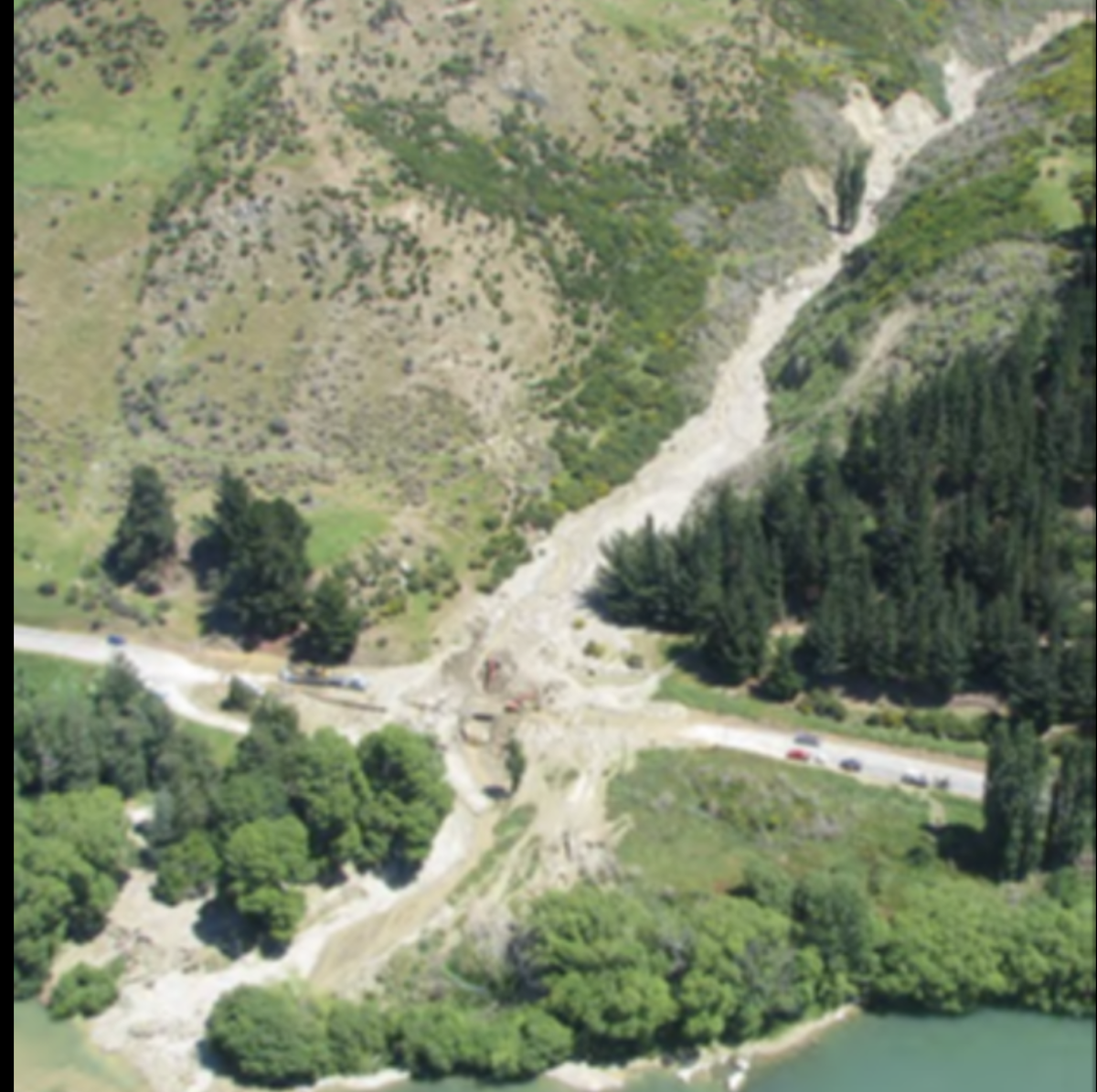 Debris flooding washed out the state highway at Black Jacks Creek in 2017. Image: supplied
A new hazard assessment for the Roxburgh area has mapped where debris floods are most likely to occur during very heavy rainfall.
On November 26, 2017 Roxburgh was hit by severe flash flooding and debris flows following intense thunderstorms - described as the worst in over four decades.
The event, which occurred after months of dry weather, caused significant damage, cut off access to the town, and led to a major water supply crisis.
State Highway 8 was severely damaged by debris at five main creek sites (including Reservoir, Black Jacks, and Pump Station creeks), cutting the town off from the south.
The Otago Regional Council (ORC) has invited the public to a community event to understand the latest findings from their natural hazards team.
The study examined 13 catchments feeding into the area between Coal Creek Flat and Dumbarton.
It focused on alluvial fans — low-lying areas formed by sediment deposited from creeks — which can be prone to debris flooding during intense rain.
ORC manager natural hazards Dr Jean-Luc Payan said the work built on ongoing engagement with the Roxburgh community.
“The new mapping identifies areas where debris floods are more likely to occur and assesses the level of risk for people and property,” he said.
The assessment models three different sizes of debris floods for each of the 13 alluvial fans.
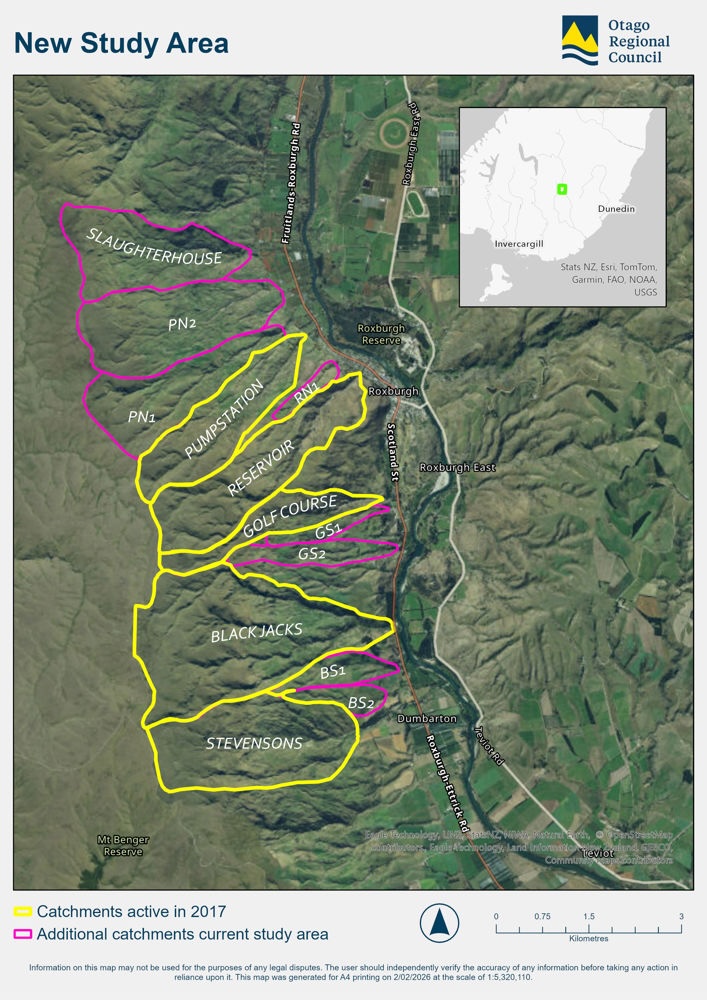
The map shows the 13 catchments in the Teviot Valley included in the new study. Image: supplied
Smaller events are more common, while very large floods are rare. The mapping shows how floodwaters and debris could travel, how deep they might be, and what properties or infrastructure could be affected.
Properties located close to creek channels or downslope of State Highway 8 may face higher risk, according to the findings.
However, Jean-Luc stressed that being on an alluvial fan — or even in a higher-risk area — does not mean a debris flood will definitely occur, nor that homes are in immediate danger.
“This information is intended to help people understand where hazards exist and support early awareness and preparedness,” he said.
“There’s no reason to be alarmed — we’re simply sharing information so the community can understand the risk, stay safe and make informed, early decisions.”
Jean-Luc also confirmed there are currently no planning changes or mitigation measures proposed as a result of the study.
Any future decisions around land-use planning, adaptation or mitigation would be community-led and involve Central Otago District Council, NZ Transport Agency Waka Kotahi, Otago Civil Defence Emergency Management and other stakeholders.
The community event at the Roxburgh Golf Club will be held on February 18, with a drop-in session 3pm to 6pm.
This will allow residents to speak one-on-one or in groups with staff from ORC, Central Otago District Council, Civil Defence Emergency Management and NZTA, view detailed hazard maps, and raise questions or concerns.
A formal presentation and Q&A session will follow from 6.30pm to 9pm, with technical experts outlining the study’s findings and answering questions.
Alongside the full technical report, ORC has published an easy-to-read summary and a set of frequently asked questions addressing common concerns — including whether residents in higher-risk areas need to relocate. The council’s answer is clear: no one is required to move.
“Being in a higher-risk area does not mean a debris flood will definitely happen,” Jean-Luc said.
“Any future decisions would involve further work and full community engagement.”
Mapping for other alluvial fans in the wider Teviot Valley is also available through the Otago Natural Hazards Portal.
The full report, summary and FAQs can be accessed here, or residents can contact ORC’s Natural Hazards team on 0800 474 082 or [email protected] for assistance.
NEWS

FREE ADVICE