Successful translocation project inside lizard sanctuary

Aimee Wilson
13 February 2026, 5:00 PM
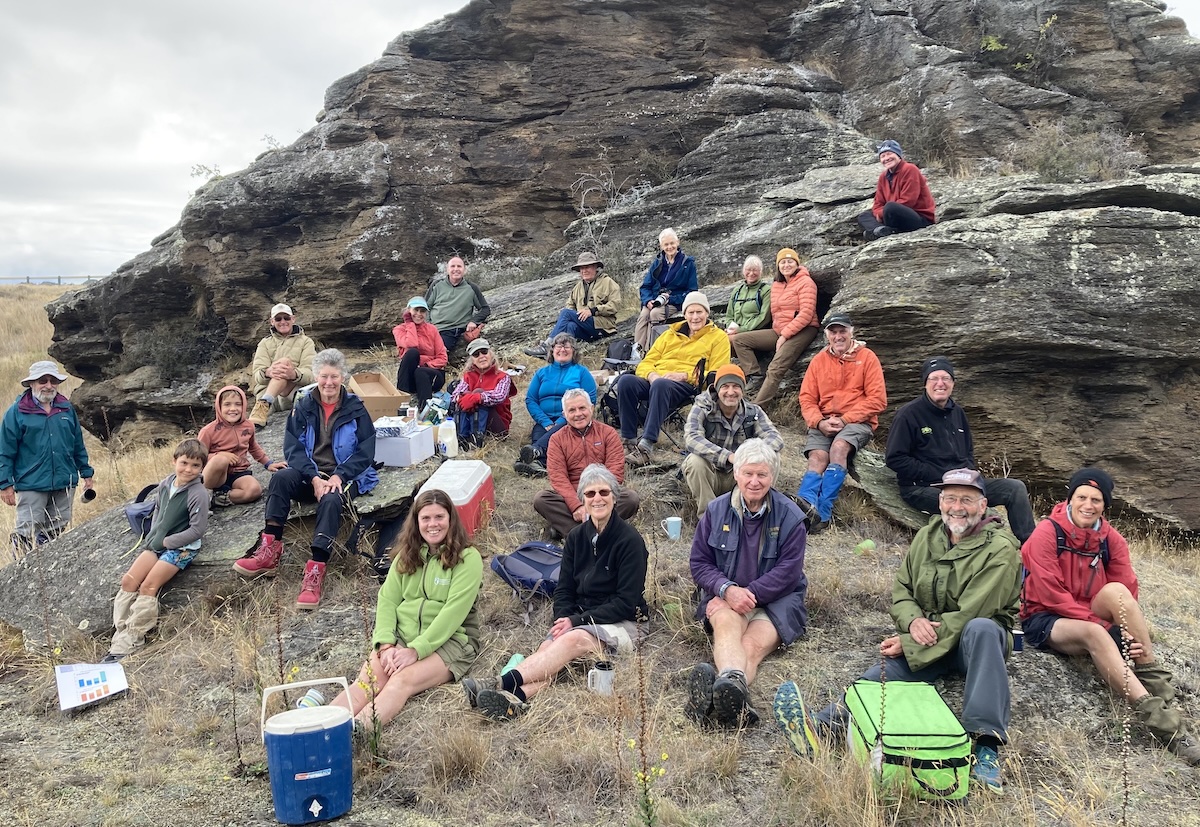 Central Otago Ecological trustees and volunteers at the Mokomoko Dryland Sanctuary. Image: supplied
Wildlife is thriving in the Mokomoko Dryland Sanctuary near Alexandra, thanks to a dedicated group of volunteers and their work over the past 10 years.
The translocation project of many skinks and geckos since 2018 into the 14ha site has been hugely successful for the Central Otago Ecological Trust.
Led by Dr Grant Norbury, a wildlife ecologist who is retiring this week from Manaaki Whenua Landcare Research after 33 years, the sanctuary is also abundant with regenerated native bush and at least 46 species of moth.
Seven different species of lizard now live there and the 2m-high fence keeps mammalian pest species out - mice, rats, ferrets, rabbits, hares, cats and hedgehogs.
But trustee Anna Yeoman marvels at seeing the Karearea - native falcon, occasionally preying on lizards, as an example of native predation that is naturally occurring onsite.
It’s all part of the natural cycle of life. Also, lizards are omnivores and not only munch away on coprosma berries and insects, but the bigger Grand skinks will sometimes eat a smaller cousin, such as the Schist Gecko as well.
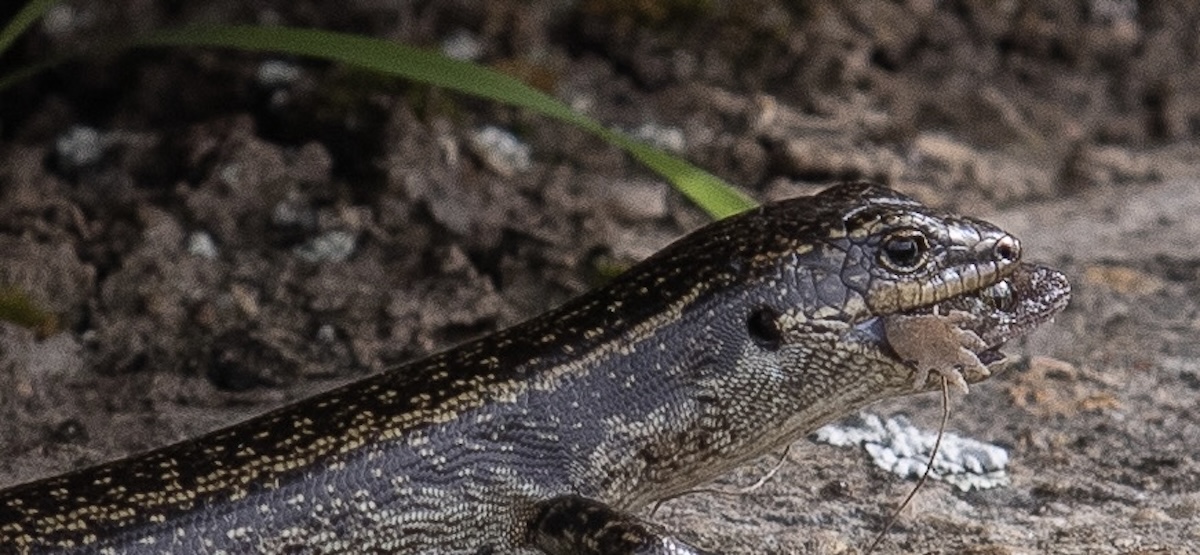
A Grand Skink munching on a Schist Gecko inside the Mokomoko Dryland Sanctuary. Image: Sam Purdie
There have also been tuatara bones found nearby from years ago, as they too once hunted smaller reptiles.
The start of the lizard translocation project goes back well before 2018, when Grant arrived in Central Otago in the 1990s to measure the predator impacts on the local lizard populations.
Originally from Australia where he grew up in a Melbourne city suburb and kept birds in an aviary, lizards became the new attraction when he moved to Alexandra.
After many years of translocation trials to see which lizard species adapted best to local conditions, the trust raised the $539,000 for the new predator fence.
Originally 33 Grand Skinks and 43 Otago Skinks were translocated, followed by 86 Jewelled (green) Geckos. Otago Green Skinks (61) were introduced in 2023.
In 2019 Grand and Otago Skinks started having babies, followed by the Jewelled Geckos. At the last count there were 69 baby Grand, 75 baby Otago Skinks and 41 baby Jewelled Geckos.
Anna said New Zealand lizards don’t breed ultra fast, and only once a year, but since they have been in the sanctuary, the numbers have started to rapidly climb.
The pair head out to the sanctuary every month or so, to check on new babies and to look for mice and make sure none are present. Other volunteers also check the fence line to ensure there are no gaps.
Because lizards are not as active when they are cold, they are a prime target for even the most humble field mouse, who can sometimes sneak its way inside the fence.
“They are violent predators,” Anna said.
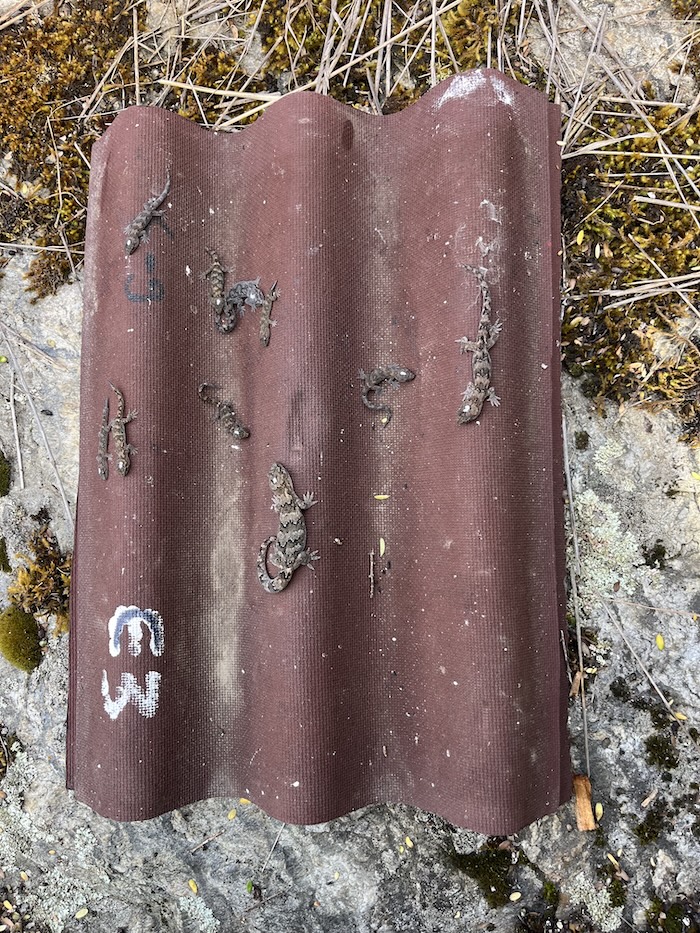
Baby lizards recently found at the Mokomoko Dryland Sanctuary. Image: supplied
In 2018 Grant received a Queens Service Medal for his services to conservation, and last year Anna published a book Geckos & Skinks: The Remarkable Lizards of Aotearoa, which received a Whitley Award for conservation.
They are currently carrying out a survey on the three species of ‘common’ lizards that have occupied the land long before the others were introduced.
These species - McCanns skinks, Southern Grass skinks and Schist geckos, are thriving in numbers inside the sanctuary, compared to outside in the general landscape.
“The numbers doubled in the first five years and have looked to have doubled again since then,” Anna said.
The sanctuary has also been used extensively by university staff and students for various studies, such as DNA testing on the lizards to look at their relationship to other species, and their social behaviours in the presence and absence of mammalian predators.
“That’s a bonus that we didn’t expect to happen,” Grant said.
The 14ha is serving its purpose and the lizards are far from using up all of the space - there are still plenty of schist outcrops that have yet to be explored by the reptiles.
“There is still plenty of unoccupied habitat,” Grant said.
Have a story to share or comment to make? Contact [email protected]

JOBS