Serious silly season food safety tips as poisoning cases set to rise

Staff Reporter
23 December 2025, 4:35 PM
 Image: iStock/LazingBee
New Zealand Food Safety (NZFS) is urging residents to "nail the basics" in the kitchen in the coming weeks, warning that food poisoning cases typically spike during the summer holiday period.
As Central Otago residents head outdoors for barbecues, camping trips, and holiday feasts, NZFS deputy-director general Vincent Arbuckle has provided some tips to help keep illness off the holiday
menu.
"No one wants to spend their holiday sick or knowing that they have made others ill from food," Vincent said.
"Fortunately, keeping safe is easy. Nail the basics, and you will be set up to enjoy your events confident that your food is safe for everyone."
One of the primary warnings this season addresses a common kitchen habit: washing raw chicken.
According to NZFS, washing poultry does not make it safer. Instead, it spreads harmful bacteria around the kitchen through splashing water, increasing the risk of cross-contamination on surfaces and
other foods.
The advice is to pat chicken dry with a paper towel - disposing of the towel immediately - and to ensure hands and surfaces are washed thoroughly with hot soapy water after handling raw meat.
For those firing up the barbecue, the critical threshold for cooked meat is 75°C.
"If you don’t have a thermometer, turn chicken, pork, and sausages often so they cook evenly, and juices run clear," Vincent said.
Residents are advised to use separate utensils and plates for raw and cooked meats to avoid cross-contamination.
With large Christmas meals often resulting in days of leftovers, strict rules apply to reheating and storage.
The "two-hour rule" is paramount: get leftovers into the fridge within two hours of cooking.
In Central Otago's summer heat, leaving food out longer significantly increases bacterial growth.
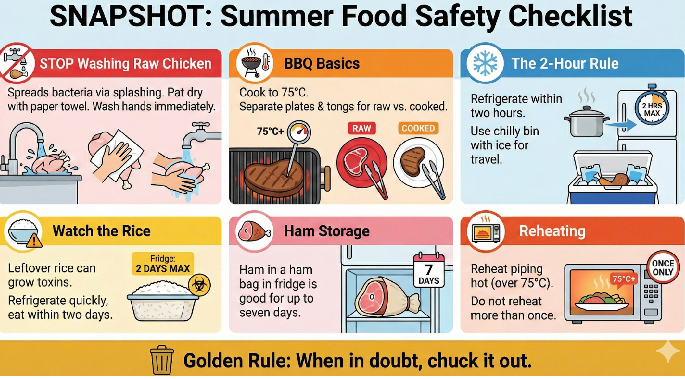
Some specific advice has been issued for high-risk foods:
Uncooked rice can contain bacterial spores that survive cooking. If left at room temperature, these spores can produce toxins that are not destroyed by reheating. Refrigerate rice dishes within two
hours and eat within two days.
A leftover whole ham stored in a ham bag will last up to seven days in the fridge.
Salads containing raw leafy greens should be eaten immediately or thrown out; they can carry bacteria that grow even in the fridge.
"When in doubt, chuck them out," Vincent said.
For those travelling to cribs or campgrounds, NZFS advises using chilly bins with ice packs for transporting food.
NEWS


WHAT'S ON