Central in an object: William King’s bike

Staff Reporter
10 January 2026, 4:19 PM
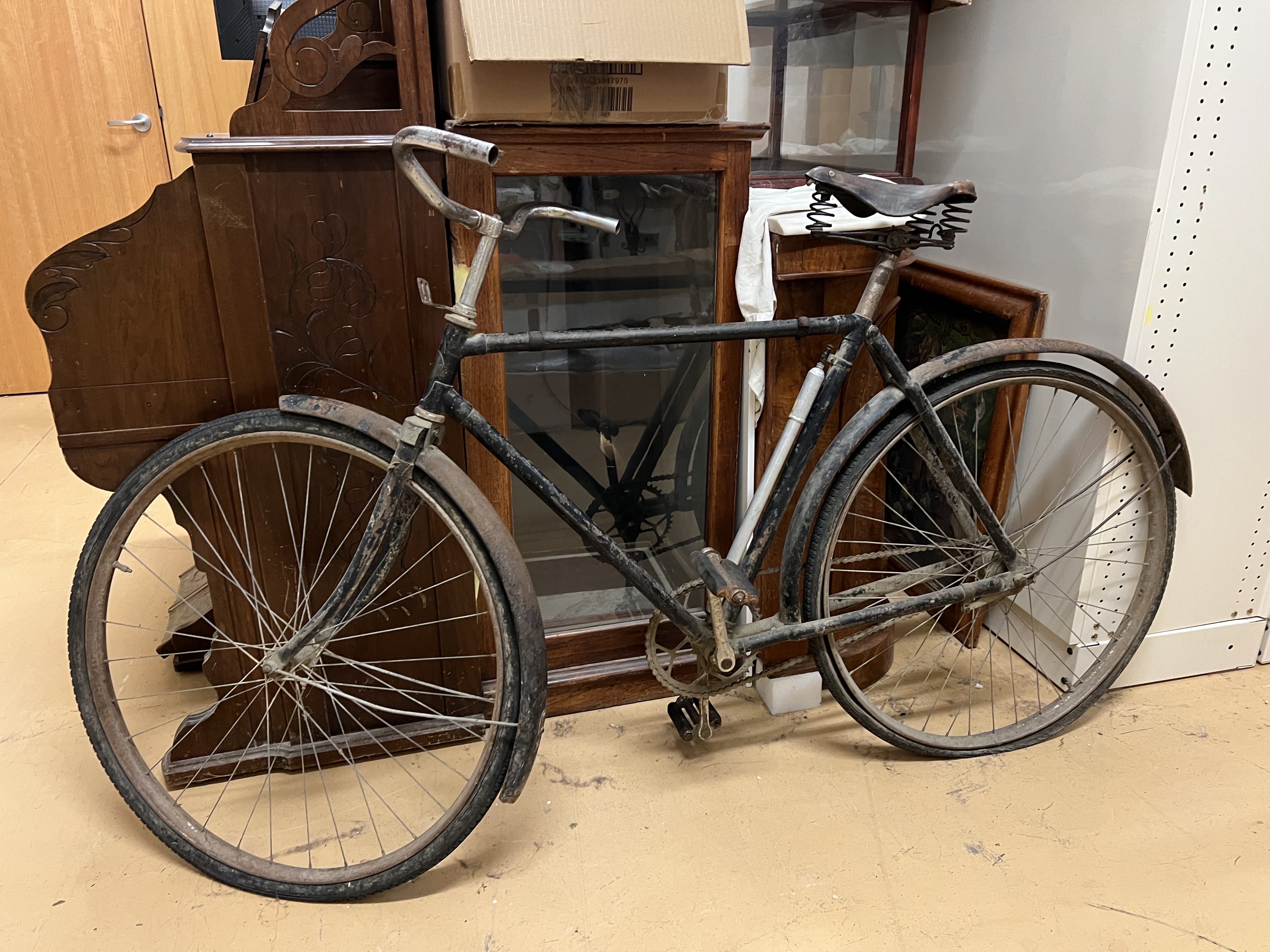 While William King’s bike is out the back for now, Central Stories Museum has a display on the heroic mine rescue of 1906. Image: The Central App
Welcome to 'Central in an object', our summer series celebrating the rich history of the Central Otago district.
We asked museum curators and volunteers across the region to strip it back to basics: choose just one item from their collections that tells a story about who we are.
Today, Central Stories Museum and Art Gallery operations manager Paula Stephenson tells us about a bicycle that belonged to a survivor of a local industrial disaster.
The object
This object is a bicycle that once belonged to William King.
While the bike itself is a standard mode of transport from its era, its owner was involved in one of Alexandra's most dramatic days.
William was one of four miners trapped in a terrifying underground fire that shook the town on July 14, 1906.
At the height of the gold dredging boom at the turn of the century, Central Otago relied on coal to keep things moving.
There were 37 small coal mines operating in the district, feeding the hungry steam dredges working the river.
On Friday, July 13, 1906, four men began the night shift in a mine on the bank of the Clutha River (then the Molyneux), less than a kilometre from Alexandra.
The disaster unfolded in the early hours when the mine caught fire, trapping miners Samuel Churchill, Michael Keane, Archibald Bruce, and William deep underground.
The fire was discovered at 3am by an engine driver on the surface.
He was unable to raise the alarm to the men below because the wires had already burnt out, so he rushed to alert the town.
The fire bell sounded at 4.30am, sending locals rushing to the scene where the mine's poppet heads and coal staging were already ablaze.
The community response was immediate.
A bucket brigade of 50 people formed, quickly extinguishing the fire on the surface, but they could make little impression on the roaring blaze in the shaft.
A pump was secured from an adjoining dredge, and a dozen experienced engineers and rescuers worked in shifts to lower themselves into the mine.
One rescuer described the searing heat of the shaft as a "living hell".
Despite the extreme conditions, they managed to get the fire under control by 6pm, allowing rescuers to stay underground longer.
At 8.30pm, William was pulled to the surface unconscious.
Over the next few hours, the remaining three miners were also rescued, all suffering from exhaustion.
By 10pm, the last rescuer emerged from the pit, marking the end of a gruelling day that would be etched into the memory of the community forever.
The event, chronicled in John McCraw’s book Mine Fire: Alexandra's Day of Heroism, stands as a testament to the bravery and unity of the town.
NEWS